
Prescription Sales Shift Toward Consumer Demand
Summary
LENZ reported more than 45% monthly prescription growth as Cipher paired online prescribing with nationwide Walmart stocking, shifting medical demand toward consumer funnels.
In August 2026, LENZ Therapeutics (LENZ), Cipher Pharmaceuticals (CPH), and STAAR Surgical (STAA) each described a shift in medical product demand: patients increasingly form a specific product preference first, while clinicians later determine eligibility, issue a prescription, or perform a procedure.[1][2][3]
Medical transactions increasingly begin with patient demand
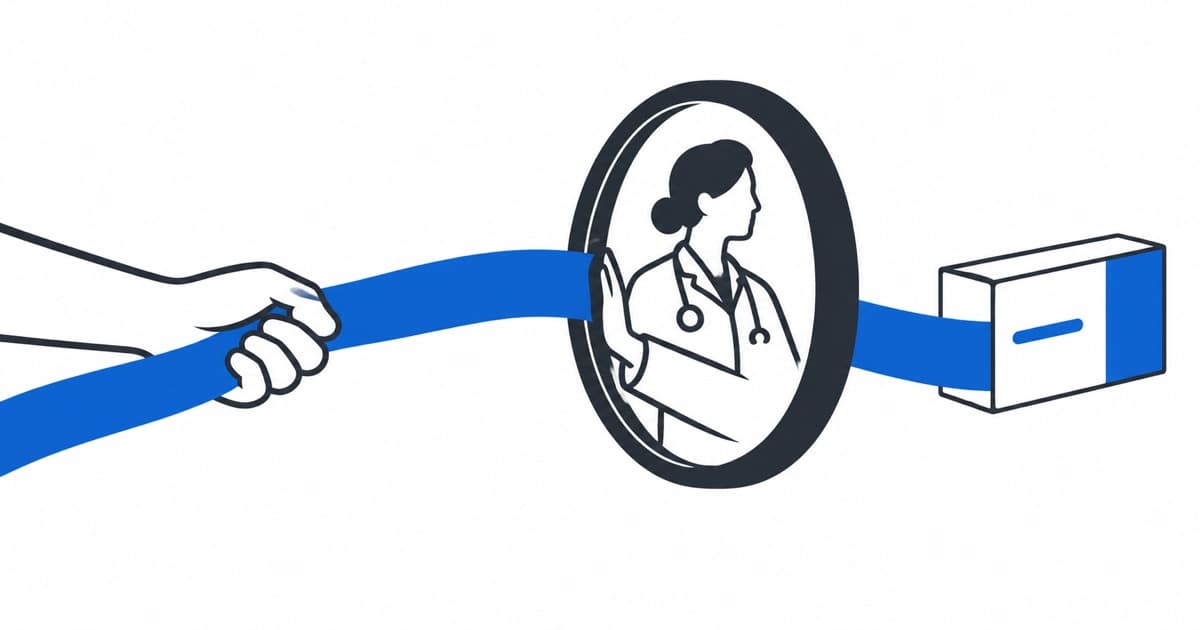
Prescription drugs and medical devices have traditionally relied on clinicians to introduce a product to an eligible patient. Consumer advertising, brand websites, and social media now create awareness and capture intent before the clinical encounter. Online or in-person professionals still make the medical decision, while pharmacies and surgical providers complete delivery. The starting point for demand is changing; clinical judgment is not disappearing.
LENZ connects the steps most directly. After a consumer becomes interested through the VIZZ website, an independent licensed eye-care professional can review medical history and determine telehealth eligibility; a prescription is then routed automatically to an ePharmacy partner for home delivery.[1] Cipher uses a related model for the acute treatment of head lice and scabies, combining a prescription within an hour, instant routing to a nearby pharmacy, and nationwide Walmart stocking.[2]
Prescriptions, stocking, and named-product requests support the shift
LENZ showed why broad physician reach alone may not generate recurring prescriptions. More than 13,000 physicians had prescribed VIZZ and more than 75% had prescribed it multiple times, yet management said consumers often initiated the discussion and shifted more commercial investment toward stimulating consumer demand. After launching telehealth and expanding national television advertising in July, total prescriptions grew more than 45% month over month.[1] Management did not disclose telehealth's share of the increase, so the full monthly gain cannot be attributed to the new channel.
Cipher showed that a digital entry point also needs physical availability. The company had previously said its direct-to-consumer platform generated no meaningful volume. It then began a program in the third quarter of 2026 to stock Natroba and its authorized generic in Walmart stores across the United States.[2] For an acute prescription, conversion depends on advertising and online evaluation as well as whether the patient can obtain the drug that day.
STAAR provides supporting evidence without online prescribing. Management said its earlier sales argument about practice economics had become somewhat dated because patients were asking for the reversible EVO implantable lens by name, prompting more surgeons to offer it. In Japan, unit volume rose 14% in the quarter after consumer-awareness initiatives launched in November 2025, although currency pressure limited reported sales growth to 2%.[3]
Customer acquisition and fulfillment now shape the economics together
These cases shift part of the industry's control point away from professional coverage and toward consumer acquisition and fulfillment. Drug companies need to connect evaluation, insurance processing, prescribing, and delivery while interest is high. Device companies may still depend entirely on an in-person surgeon, but consumer brand awareness can create a named-product request before the consultation. Sales representatives still support clinicians, while incremental orders become more sensitive to advertising conversion, consultation capacity, pharmacy inventory, and procedure availability.
The evidence supports a channel change, not a larger market. LENZ did not disclose the telehealth share of prescriptions, Cipher has not reported volume from its new combination, and STAAR shows that online evaluation is not required for consumer-led demand. The next useful measures are new-patient prescription mix, website-to-prescription conversion, nationwide store availability, and whether named-product requests produce sustained procedure volume.
Companies exposed to the shift
- Arcutis Biotherapeutics (ARQT): Its virtual dermatology platform uses independent clinicians and a pharmacy hub to convert brand-generated ZORYVE demand. It has exposure to the same mechanism, but the evidence does not establish a sales benefit.
- GoodRx (GDRX): Pharma Direct provides manufacturer-funded acquisition, affordability, and telehealth support that could serve brands building consumer prescription funnels.
- Harrow (HROW): It already owns cash-pay ophthalmic brands and dispensing capabilities. Adding an online prescribing entry point could create a loop similar to LENZ's, but the supplied evidence does not show that it has done so.
Sources
[1] Drillr · LENZ Therapeutics · August 11, 2026 · FY2026 Q2 earnings call and Form 10-Q
“The telehealth channel provides interested consumers a convenient pathway to be evaluated by an independent, licensed eye care professional at the moment of product interest.”
[2] Drillr · Cipher Pharmaceuticals · August 12, 2026 · FY2026 Q2 earnings call and company results release · https://investingnews.com/cipher-pharmaceuticals-reports-second-quarter-2026-results/
[3] Drillr · STAAR Surgical · August 12, 2026 · FY2026 Q2 earnings call
This material identifies potentially overlooked industry changes and companies. It is not a stock recommendation.